
Orchestrating the Future of Energy: VPPs, EMS, and the Talent to Power the Transition
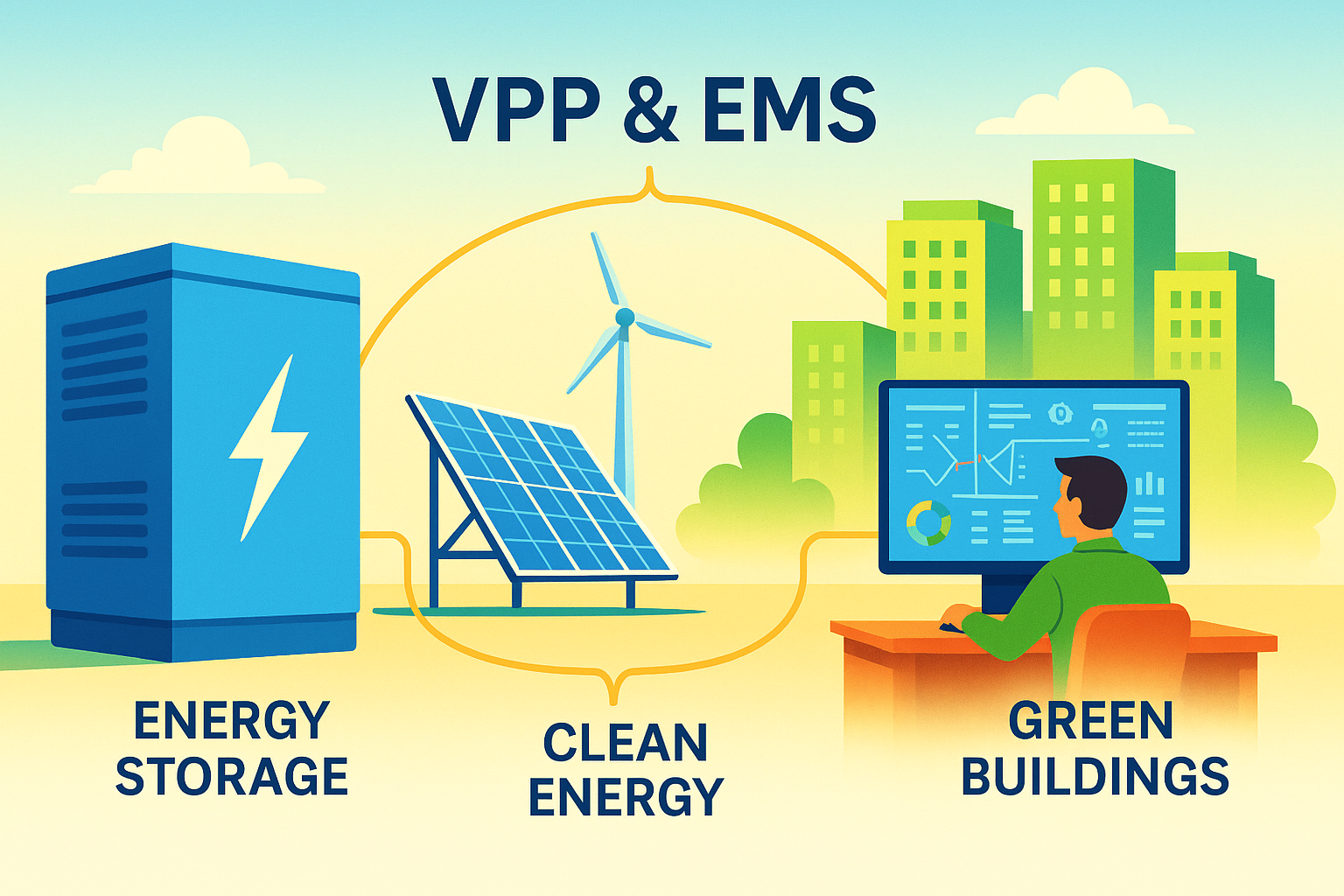
The energy transition is often described in terms of hardware—solar panels, batteries, EV chargers, wind turbines, and green buildings. But hardware alone doesn’t solve the complexity of an increasingly distributed grid. What stitches this all together is intelligence: the rise of Virtual Power Plants (VPPs) and Energy Management Systems (EMS).
Together, these platforms represent the digital backbone of clean energy. They transform distributed energy resources into flexible, dispatchable, and reliable power—while unlocking billions in savings and reshaping how communities, businesses, and entire regions interact with energy.
Why VPPs and EMS Are So Critical
At their core, VPPs aggregate and coordinate distributed energy resources (DERs)—everything from rooftop solar and residential batteries to EV fleets and smart building systems. EMS platforms provide the “control room” intelligence—forecasting, optimizing, and dispatching these resources in real time.
This is not just grid modernization. It’s grid transformation. Instead of relying on centralized fossil generation to meet peak demand, VPPs can deliver the same services with far less cost, faster response, and a lighter carbon footprint.
- Cost-effective: VPPs are 40–60% cheaper than peaker plants during peak demand.
- Scalable: 60 GW of VPP capacity nationally could save consumers $15–35 billion.
- Resilient: In California alone, consumer savings could exceed $550 million annually, while improving reliability for all.
- Efficient: Pilot projects show 19–31% more renewable utilization and up to 39% lower reliance on centralized grid power.
The Energy Storage Connection
Energy storage is the linchpin of this ecosystem. Solar and wind generate the clean megawatts, but storage ensures those megawatts are available when needed. Without storage, the variability of renewables limits their potential. Without VPPs and EMS, storage is siloed capacity.
When batteries are aggregated and orchestrated:
- They shift load away from peak demand windows.
- They deliver ancillary services like frequency response and voltage support.
- They allow renewables to scale without destabilizing the grid.
Energy storage doesn’t just benefit from EMS—it depends on it for economic viability. And conversely, VPPs rely on distributed batteries to provide the flexible capacity that makes the model work. This interdependence is why energy storage and VPP adoption are accelerating in parallel.
Smart Buildings as Active Grid Players
Green buildings represent another frontier. What used to be “dumb load” (lights, HVAC, equipment) is now programmable, flexible demand. Through EMS platforms, commercial buildings can:
- Shift HVAC or lighting loads away from expensive peak hours.
- Pair rooftop solar with behind-the-meter batteries to become grid assets.
- Participate in demand response programs that provide revenue streams.
- Balance comfort, cost, and carbon automatically through intelligent control.
Imagine thousands of commercial and multi-family buildings, each dynamically tuned to grid conditions. The result is a flexible, low-carbon infrastructure that amplifies the value of both renewable energy and energy storage.
Innovative Solutions Emerging
Across the industry, we’re seeing an explosion of creativity in how companies approach VPPs and EMS. A few trends stand out:
- Smart building platforms that balance occupant comfort, operating costs, and emissions in real time.
- Trading systems that allow distributed storage assets to seamlessly participate in wholesale and ancillary markets.
- Aggregation layers that turn thousands of behind-the-meter batteries into unified, dispatchable virtual plants.
- AI-driven forecasting that predicts demand and renewable generation more accurately than ever before.
- Grid-aware EV charging that transforms vehicles from passive loads into flexible energy assets.
Each of these innovations highlights a common theme: clean energy is no longer just about adding generation capacity. It’s about coordinating what we already have.
The Human Factor: Talent Orchestration
For all their intelligence, VPPs and EMS don’t run themselves. The clean energy transition requires people who can bridge software, hardware, and market dynamics—and those skill sets are in high demand.
Key roles driving this shift include:
- Software Engineers & Data Scientists – Building the EMS platforms, predictive algorithms, and AI-powered forecasting engines that make VPPs possible.
- Electrical & Power Systems Engineers – Designing and integrating batteries, inverters, and control systems that can safely interact with the grid.
- Controls & Automation Specialists – Developing the real-time orchestration layers that aggregate thousands of distributed assets.
- Market Analysts & Energy Traders – Translating technical capabilities into revenue streams by navigating wholesale markets, demand response, and ancillary services.
- Cybersecurity Experts – Ensuring the resilience and reliability of a digital-first grid against growing risks.
- Business Development & Product Leaders – Connecting technology to customers, utilities, and communities to drive adoption and scale.
- Sustainability & Policy Leaders – Aligning innovation with regulatory frameworks, carbon goals, and community needs.
The intersection of software + electrical engineering + market expertise is where the future grid is being built. And just as VPPs orchestrate energy assets, companies must orchestrate the right mix of technical and leadership talent to succeed.
Conclusion: Orchestrating the Future
VPPs and EMS represent one of the most powerful levers for scaling clean energy. They enable energy storage to become economically indispensable, transform green buildings into grid assets, and open the door for innovative solutions that make the grid more reliable, efficient, and sustainable.
The clean energy transition isn’t just about hardware in the field—it’s about intelligence in the system and talent in the workforce. Orchestrating the future of energy will take both.