
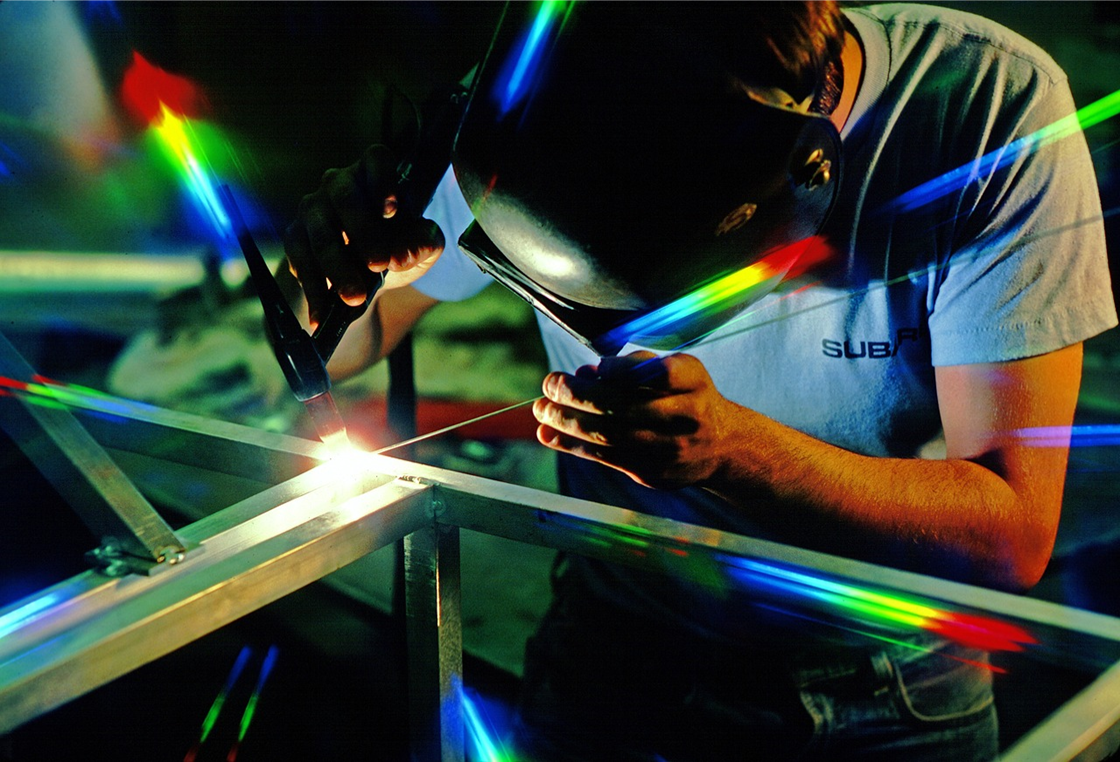
From Horsepower to High Tech: The EV, Robotics and AI Jobs Reshaping Automotive
Across advanced manufacturing, robotics, automation, clean technology, and mobility, the line between traditional industry and technology is disappearing. Companies that once competed primarily through mechanical engineering and operational excellence now also depend on software, artificial intelligence, connected systems, sophisticated controls, and advanced energy technologies.
Few industries demonstrate this convergence more clearly than automotive. Electric vehicles are changing propulsion systems and supply chains. Robotics is transforming factories. Software is becoming part of the vehicle’s core architecture, while autonomous-driving technology is moving from research environments into commercial operations.
Together, these changes are creating new positions—and redefining what automotive employers need from their engineering and technical talent.
EVs Are Creating an Entirely New Engineering Ecosystem
Electric vehicles are no longer a niche segment. More than 20 million electric cars were sold worldwide in 2025, accounting for approximately one in four new cars. The International Energy Agency projects sales of roughly 23 million in 2026, or 28% of the global market. (International Energy Agency)
EV growth is creating demand far beyond traditional vehicle engineering. Automakers and suppliers need people who understand batteries, electric powertrains, power electronics, thermal management, charging infrastructure, controls, manufacturing, and the software that connects those systems.
Fast-growing EV-related roles include:
- Battery systems and battery-management engineers
- Cell-development and battery-materials specialists
- Electric powertrain engineers
- Power-electronics engineers
- Thermal-management engineers
- Charging-infrastructure specialists
- Embedded-controls engineers
- Battery manufacturing and process engineers
- Battery safety, testing, and validation specialists
- Recycling and lifecycle-management professionals
These roles require different combinations of electrical, chemical, mechanical, manufacturing, and software expertise. Battery engineers, for example, must balance energy density, charging speed, safety, durability, cost, manufacturability, and performance under changing environmental conditions.
The transition is also affecting the broader supply chain. Companies producing semiconductors, battery materials, electric motors, charging equipment, and thermal-management systems are becoming increasingly important participants in the automotive economy.
For hiring teams, the challenge is recognizing that some of the best EV talent may come from outside automotive. Relevant candidates may have experience in energy storage, aerospace, electronics, industrial power systems, clean technology, or advanced materials.
Robotics Is Transforming Automotive Manufacturing
Robots have been used in automotive plants for decades, particularly for welding, painting, and material handling. What is changing is the intelligence, flexibility, and reach of those systems.
Modern factories increasingly combine industrial robots, autonomous mobile robots, machine vision, advanced sensing, simulation, and AI-enabled controls. These systems can move materials, inspect components, support assembly, identify defects, and adapt production processes with less manual reprogramming.
That evolution is expanding demand for:
- Robotics engineers
- Controls and automation engineers
- PLC programmers
- Machine-vision engineers
- Mechatronics engineers
- Autonomous mobile robot specialists
- Manufacturing systems integrators
- Robot technicians and field-service engineers
- Digital-twin and simulation engineers
- Functional-safety professionals
The most valuable professionals in this area often understand more than robot programming alone. They know how equipment interacts with conveyors, sensors, safety systems, production software, operators, and upstream or downstream processes.
They can also work through the realities of a production environment: uptime requirements, cycle times, changing product configurations, equipment constraints, maintenance needs, and the financial consequences of a stopped line.
As automotive manufacturing becomes more automated, employers will need technical professionals at multiple levels—from engineers designing robotic systems to technicians installing, maintaining, troubleshooting, and improving them.
Software Is Becoming Part of the Vehicle’s Core Architecture
Modern vehicles contain millions of lines of code, but automotive software is moving beyond programs that control individual components. Manufacturers increasingly want centralized computing platforms that can support new features, process vehicle data, receive over-the-air updates, and improve throughout a vehicle’s operating life.
Stellantis—whose brands include Chrysler, Dodge, Fiat, Jeep, and Ram—is one example. Its technology strategy centers on STLA Brain, a centralized computing and software architecture; STLA SmartCockpit, its digital-cabin platform; and STLA AutoDrive, its automated-driving system.
The company plans to begin launching these technologies in 2027. By 2030, Stellantis expects 35% of its global annual vehicle volume to include at least one of the three platforms. (Stellantis)
This shift is creating demand for:
- Embedded-software engineers
- Systems and platform architects
- Cloud and connectivity engineers
- DevOps and continuous-integration specialists
- Software-validation engineers
- Vehicle cybersecurity professionals
- Functional-safety specialists
- Human-machine interface designers
Development methods are changing, too. Stellantis has reported using virtual engineering environments to develop and test software before physical hardware is available. On its newer platforms, the company says 80% to 85% of testing is performed through software-in-the-loop systems. (Stellantis)
Experience with simulation, virtual validation, automated testing, and hardware-software integration is therefore becoming increasingly valuable.
Autonomous Vehicles Are Becoming a Commercial Operation
Fully autonomous vehicles were still widely viewed as experimental just a few years ago. In 2026, autonomous ride-hailing is a commercial reality—although it remains limited to specific operating areas and regulatory environments.
Waymo reported providing 15 million rides during 2025 and surpassing 20 million lifetime rides. The company is now preparing operations in more than 20 additional cities, including international markets. (Waymo)
Scaling autonomy requires a broad workforce. The technology itself calls for machine-learning researchers, perception engineers, motion-planning specialists, simulation engineers, mapping experts, and safety professionals.
Commercial deployment also requires:
- Fleet technicians
- Manufacturing and integration engineers
- Field-service teams
- Operations managers
- Remote-assistance specialists
- Incident-response professionals
- Regulatory and public-policy experts
Autonomy is no longer solely a research challenge. It is also a manufacturing, deployment, maintenance, safety, and operational challenge.
That distinction matters when hiring. Someone who has developed a successful prototype may not have experience making it reliable across changing weather, complex traffic, physical hardware, or a high-utilization commercial fleet.
AI Is Spreading Across the Automotive Enterprise
Artificial intelligence in automotive extends well beyond autonomous driving. Automakers are applying AI to vehicle engineering, manufacturing quality, predictive maintenance, fleet-data analysis, supply chains, customer support, and in-vehicle experiences.
In 2025, Stellantis expanded its work with Mistral AI across vehicle engineering, manufacturing, fleet-data analysis, and the development of an AI-powered in-car assistant. (Stellantis)
On the factory floor, machine-vision systems can inspect parts and finished assemblies. Predictive tools can identify potential equipment failures. Digital twins allow engineers to model manufacturing changes before modifying physical operations.
These applications are creating or expanding roles such as:
- Applied-AI and machine-learning engineers
- Data engineers and data scientists
- Machine-vision specialists
- Predictive-maintenance specialists
- AI product managers
- AI safety and governance professionals
AI will also change existing positions. Mechanical, electrical, manufacturing, and quality engineers will increasingly work with data-rich systems and AI-enabled tools. At the same time, AI specialists entering automotive must understand physical constraints, production realities, safety requirements, and the consequences of system failure.
The Talent Lens
The automotive industry is not simply replacing traditional jobs with technology positions. It is combining disciplines that were once recruited separately.
The strongest hires will often be professionals who can connect software with hardware, batteries with vehicle systems, robotics with production, and AI with real-world operating conditions.
Hiring teams should begin by defining the actual conditions for success:
- Does the position require research, production execution, or both?
- Will the employee work in simulation, on physical hardware, on a factory floor, or across all three?
- Is direct automotive experience essential?
- Could someone from robotics, aerospace, industrial automation, energy storage, clean technology, or another safety-conscious engineering environment bring the necessary capabilities?
The companies that answer those questions clearly will be better positioned to look beyond familiar titles, recognize transferable expertise, and build the interdisciplinary teams required for the next generation of mobility.