
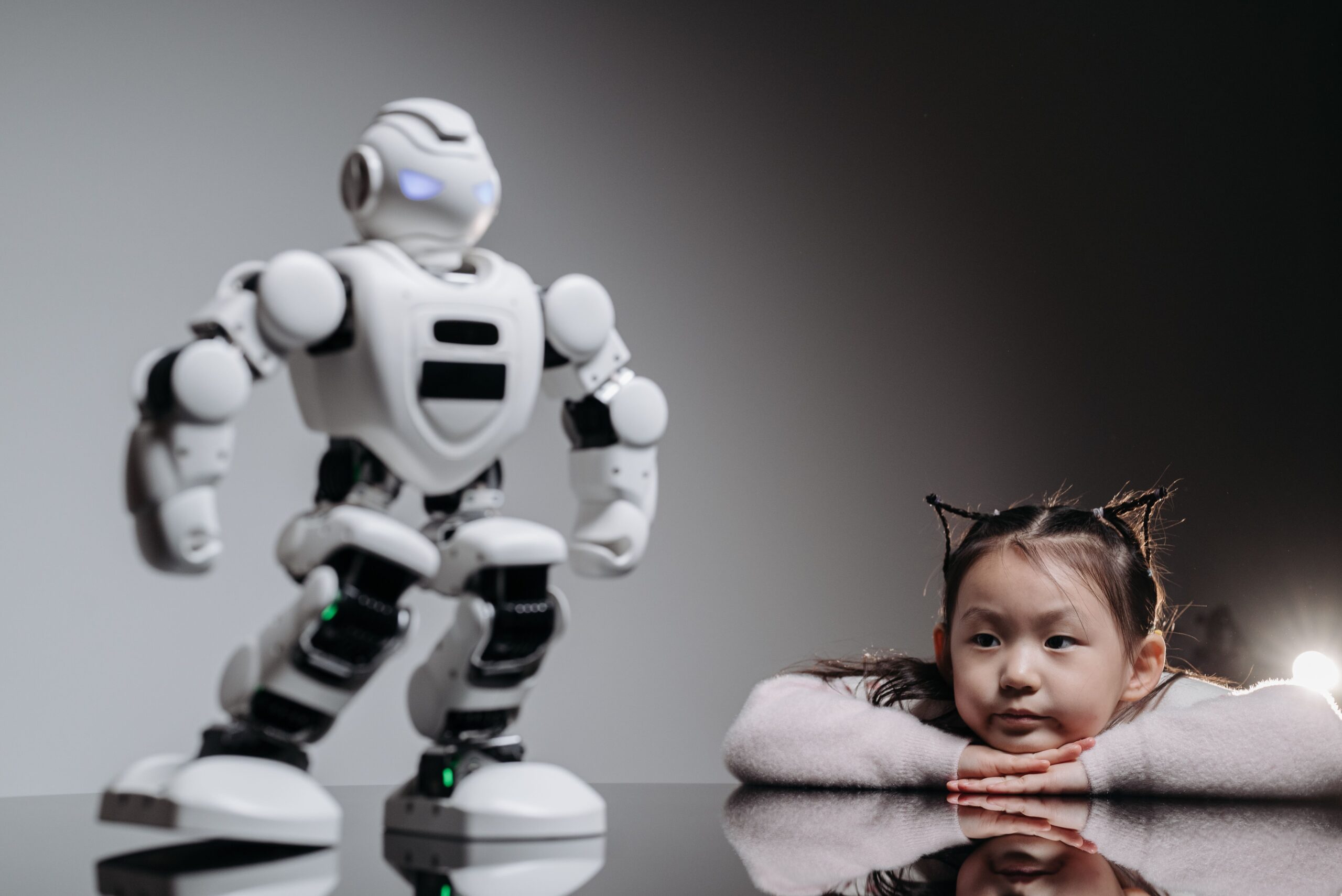
The Robotics Talent Market Is Growing Up
Over the last several months, I’ve had the opportunity to recruit across robotics software, motion planning, controls, computer vision, AI/ML, applications engineering, deployment engineering, and robotics leadership roles.
In that time, I’ve spoken with founders building next-generation robotics companies, engineering leaders scaling teams, and candidates evaluating opportunities across the industry.
One thing has become increasingly clear:
The robotics talent market is growing up.
And perhaps more importantly, the expectations placed on robotics talent are changing rapidly.
The conversations I’m hearing today are very different from the conversations I was hearing even a few years ago.
The industry is moving beyond proving that robots can work.
The focus now is proving they can scale.
The Industry Has Moved Beyond the Prototype
Historically, many robotics companies were solving a single fundamental problem:
Can we make the technology work?
Today, many organizations have already demonstrated impressive technical capability.
The challenge now is very different.
Can the technology be deployed repeatedly?
Can it operate reliably in real-world environments?
Can it be maintained, updated, monitored, and improved at scale?
Can it deliver measurable value to customers?
In conversations with founders, I hear far less discussion about technical possibility and far more discussion about deployment, reliability, scalability, and customer success.
The prototype is no longer the finish line.
In many cases, it’s just the beginning.
The Talent Bar Has Risen
One of the most significant changes I’ve observed is the increasing breadth of skills employers expect from robotics professionals.
A decade ago, a robotics company might have hired a software engineer because they were strong in C++.
Today, many organizations are looking for engineers who are comfortable working across multiple technologies and disciplines.
Increasingly, I see requirements that include:
- C++ for production robotics software
- Python for rapid prototyping, testing, simulation, and AI workflows
- ROS2 and distributed robotic systems
- Machine learning and computer vision fundamentals
- Cloud-based deployment infrastructure
- Sensor integration
- Systems debugging
- Real-time software development
And increasingly, I’m seeing organizations express interest in engineers familiar with Rust as robotics systems become larger, more complex, and increasingly safety-critical.
The reality is that robotics has become a systems problem.
Companies aren’t simply hiring programmers.
They’re hiring engineers who can understand how hardware, software, perception, controls, AI, and operations interact.
Robotics Is Becoming a Full-Stack Engineering Discipline
One of the phrases I hear repeatedly from engineering leaders is:
“We need people who can operate across boundaries.”
The most sought-after engineers today are often not the people who understand only one component of the system.
They’re the people who understand how the pieces fit together.
A motion planning engineer who understands perception.
A software engineer who understands hardware constraints.
A computer vision engineer who understands deployment realities.
An AI engineer who appreciates real-time operational requirements.
The strongest candidates are increasingly those who combine depth in one area with working knowledge across several others.
The industry still values specialists.
But it increasingly rewards versatility.
Deployment Experience Is Becoming a Differentiator
Perhaps the biggest shift I’ve observed involves how organizations evaluate experience.
Historically, many robotics companies prioritized research credentials.
Today, deployment experience often carries equal or greater weight.
Founders and engineering leaders repeatedly tell me they value people who have experienced:
- Customer deployments
- Field troubleshooting
- Reliability challenges
- Production software environments
- Systems integration
- Root cause analysis
- Operational support
Why?
Because real-world deployment remains one of the hardest problems in robotics.
Laboratory performance and customer performance are often very different things.
The engineers who have navigated those challenges bring tremendous value.
One founder recently shared a sentiment I’ve heard repeatedly in different forms:
“The prototype is the easy part.”
Five years ago, that statement would have surprised many people.
Today, it reflects the reality facing much of the industry.
AI Is Raising the Bar, Not Lowering It
Artificial intelligence is creating enormous opportunities across robotics.
It is also increasing complexity.
As AI becomes integrated into perception systems, navigation systems, manipulation systems, and human-machine interaction, organizations need engineers who can operate effectively across multiple domains.
Increasingly, companies are looking for professionals who understand:
- Robotics fundamentals
- Computer vision
- Machine learning workflows
- Data pipelines
- Simulation environments
- Deployment architectures
- System safety
- Human-machine interaction
The challenge isn’t simply building intelligent systems.
It’s building intelligent systems that operate reliably in the real world.
That requires a unique combination of skills that remains relatively scarce in today’s talent market.
Candidates Are Evaluating Companies Differently
The best candidates are evolving as well.
Increasingly, robotics professionals are asking deeper questions.
They want to understand:
- Customer traction
- Product-market fit
- Deployment maturity
- Leadership quality
- Funding stability
- Growth opportunities
- Technical challenges
The strongest candidates understand that the most exciting demo is not necessarily the best opportunity.
They’re evaluating whether a company can successfully bridge the gap between innovation and commercialization.
What This Means for the Future
The robotics industry is entering a fascinating new phase.
The market is moving from invention to execution.
From prototypes to production.
From technical possibility to commercial reality.
That shift is transforming the talent landscape.
The most valuable professionals increasingly combine technical depth with systems thinking, deployment experience, adaptability, and cross-functional collaboration.
The companies that win will not simply be those with the smartest technology.
They will be the organizations capable of attracting, developing, and retaining the people who can transform innovation into scalable solutions.
And in my conversations across the industry, that challenge has quickly become one of the most important competitive differentiators of all.