
Building the Future: The $106 Trillion Infrastructure Shift and the Talent to Power It
By Rob Thomas, Centricity Search Group
The Next Great Infrastructure Era Is Already Underway
A global transformation is unfolding. McKinsey estimates that the world will need to invest over $106 trillion in infrastructure through 2040 to meet rising demand for energy, mobility, data, and climate resilience. That staggering number isn’t just an economic forecast—it’s a call to action.
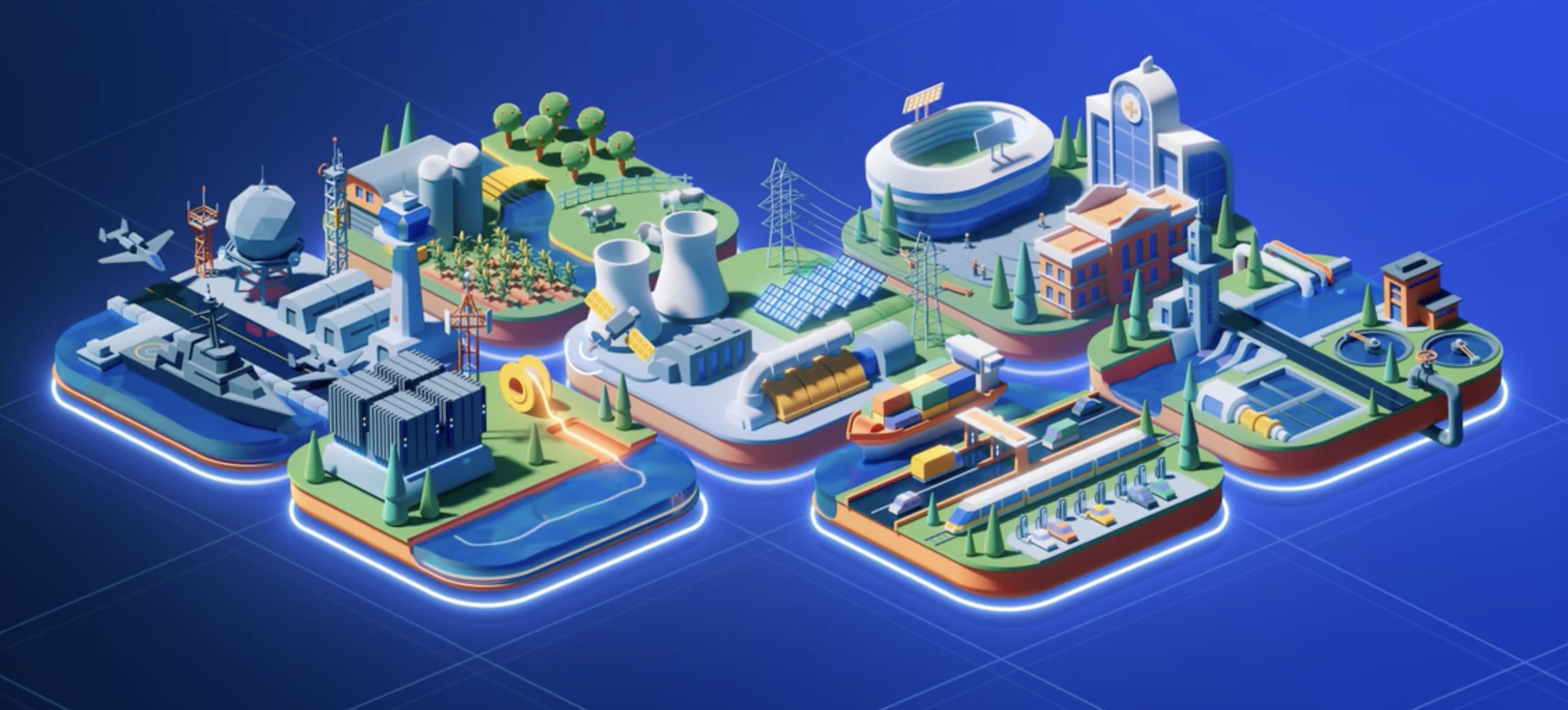
We’re not only rebuilding what exists. We’re redefining what “infrastructure” means. Roads, bridges, and power plants are now sharing the stage with digital grids, data centers, renewable generation, and energy storage systems. Every sector—energy, transportation, construction, and technology—is converging into a single, interconnected ecosystem.
And behind all that innovation are people. The future of infrastructure will be built by a new generation of thinkers, doers, and leaders who blend traditional expertise with modern fluency in sustainability and technology.
Where the Investment Is Flowing — and Why Talent Follows
McKinsey’s analysis breaks down where this $106 trillion will go, and it reveals where the world’s next wave of talent will be needed most.
- Energy ranks second, with $23 trillion in projected investment, driven by the global push to expand clean generation, upgrade aging grids, and meet the growing electrification demand from industries and end users. This is the heart of the energy transition—and it depends on engineers, developers, and business leaders who can connect renewable supply with intelligent demand.
- Digital infrastructure will attract $19 trillion, making it one of the fastest-growing verticals. Fiber, towers, satellites, and data centers form the nervous system of modern infrastructure. They enable every other sector, from manufacturing to mobility, and underpin the AI-driven systems that define our connected future. For talent, this means rising demand for professionals who can bridge hardware and software, merging IT with OT and strategy with execution.
- Waste and water infrastructure, estimated at more than $6 trillion, remains foundational to sustainability. These systems safeguard public health, conserve resources, and enable the circular economy through wastewater recovery, clean fuel production, and emissions reduction. The sector increasingly relies on specialists who can pair environmental engineering with digital monitoring and smart-systems control.
Yet some of the most critical areas for investment lie just outside traditional infrastructure categories. Green buildings, smart controls, energy efficiency, and advanced building materials will demand trillions in modernization spending in the coming decades. As cities and companies race to meet net-zero goals, the built environment must evolve—incorporating energy storage, intelligent HVAC, responsive lighting, and connected systems that reduce consumption while improving quality of life.
Each of these investment areas is interdependent. Energy needs digital, digital needs sustainability, and the built environment ties them together. The common thread is people—those with the technical expertise, leadership vision, and collaborative mindset to connect the dots.
From Traditional to Tech-Enabled: What’s Really Changed
Traditional infrastructure was about physical assets—things you could see and touch. Concrete, steel, and machinery built the backbone of the 20th century.
Modern infrastructure is just as tangible, but it’s also digital, decentralized, and data-driven. A solar field communicates with a smart grid. Electric vehicle chargers interact with virtual power plants. Wastewater systems monitor themselves through IoT sensors and predictive analytics.
This shift changes everything about the workforce. Civil engineers now collaborate with software developers. Project managers need to understand not only budgets and timelines, but also digital twins and sensor networks. The best teams look more like integrated ecosystems than linear hierarchies.
What This Shift Means for Skills and Career Trajectories
- Traditional skills are still critical: civil engineering, heavy construction, and large-scale project management remain the foundation.
- Emerging skills are reshaping the landscape: AI and IoT for asset monitoring, modular microgrids, EV-charging networks, predictive analytics, and digital twins are now standard elements of next-generation infrastructure.
- For recruiters and hiring leaders, assessing readiness means looking beyond titles to evaluate adaptability, cross-sector fluency, and a demonstrated ability to learn new systems quickly.
- For candidates, it’s time to think in hybrid terms—a mechanical engineer gaining data analytics and grid knowledge, or a construction manager developing expertise in smart controls and sustainability frameworks.
The challenge isn’t just keeping up—it’s preparing for convergence. The future belongs to professionals who can merge physical and digital, engineering and insight, systems and sustainability.
The Talent Transformation Imperative
Infrastructure transformation isn’t limited by capital. It’s limited by people.
The McKinsey report highlights a once-in-a-generation opportunity for governments, investors, and operators. Yet across every one of those sectors, talent scarcity threatens to slow the pace of progress.
The industry is short on cross-functional leaders—people who can bridge the gap between the old and the new. It needs engineers who think like strategists, strategists who understand code, and technicians who can interpret data.
At Centricity, we call these individuals Impact Players. They’re the ones who accelerate progress. They see the big picture and execute with precision. They make complex transitions smoother, safer, and faster. And they’re the reason some companies are thriving while others are struggling to keep pace.
The Cost of Standing Still
Falling behind in talent readiness carries a measurable cost. Projects delay. Budgets balloon. Opportunities pass by.
According to the U.S. Bureau of Labor Statistics, the clean energy and infrastructure sectors consistently post more open positions than available candidates. The situation is especially acute in energy storage, renewable integration, and grid modernization. In some markets, demand for qualified professionals is outpacing supply by more than 3-to-1.
This imbalance creates both risk and opportunity. The organizations that act now—investing in upskilling, cross-training, and strategic recruiting—will capture market share as others struggle to fill critical roles.
Building the Workforce to Match the Moment
To deliver on a $106 trillion vision, leaders must rethink what “infrastructure talent” means. The workforce of the future won’t fit neatly into the old job titles or silos. It will be fluid, diverse, and tech-enabled.
Here’s where to start:
- Rethink Role Definitions The best organizations are merging skill sets that once lived in separate worlds. Pair systems engineers with data scientists. Connect construction leads with AI specialists. The magic happens where disciplines overlap.
- Invest in Learning Pipelines Partner experienced professionals with early-career innovators. The next generation needs mentors who understand how large-scale systems succeed or fail. Knowledge transfer is the most renewable resource we have.
- Partner with Specialized Recruiters Finding the right people requires networks, insight, and deep sector fluency. Partner with recruiters who understand the language of both legacy infrastructure and emerging clean technologies. The right match can change the trajectory of a business.
The Human Side of the $106 Trillion Opportunity
The infrastructure transformation isn’t just an economic project—it’s a human one.
Every innovation, from solar rooftops to smart buildings, begins with people who believe progress is possible and have the skills to make it real. The organizations that recognize this truth will lead not only in building structures, but in shaping a more sustainable future.
At Centricity Search Group, we see it every day. When the right talent meets the right mission, the impact goes far beyond a single hire. It builds momentum that drives industries forward.
The future of infrastructure is being written right now. Let’s make sure we have the people ready to build it.
Call to Action
If your organization is preparing for its next phase of growth in renewable energy, smart infrastructure, or sustainable construction, connect with me through my virtual green door at centricitysearch.com. Together, we’ll find the Impact Players who can turn your vision into reality.
Want to do your own reading and research?
- McKinsey & Company. “The Infrastructure Moment: A New Era for Global Investment and Innovation.” September 2024. https://www.mckinsey.com/industries/infrastructure/our-insights/the-infrastructure-moment
- U.S. Bureau of Labor Statistics (BLS). “Employment Projections 2023–2033” and “Job Openings and Labor Turnover Survey (JOLTS), 2024.” https://www.bls.gov/emp/ https://www.bls.gov/jlt/
- International Energy Agency (IEA). “World Energy Investment 2024.” https://www.iea.org/reports/world-energy-investment-2024
- World Green Building Council (WGBC). “Green Building Market & Impact Report 2023.” https://worldgbc.org/article/green-building-market-impact-report-2023/
- United Nations Environment Programme (UNEP) & Global Alliance for Buildings and Construction (GlobalABC). “2023 Global Status Report for Buildings and Construction: Towards a Zero-Emission, Efficient, and Resilient Buildings and Construction Sector.” https://globalabc.org/resources/publications/global-status-report-buildings-and-construction-2023