
Powering the Future: Talent as the Battery Industry’s True Constraint
The battery industry is racing toward a $400B global value chain by 2030, with demand from EVs, grid storage, electric aviation, and even AI data centers fueling unprecedented growth. Yet, behind the gigafactories, breakthrough chemistries, and record-setting deployments lies a sobering truth: talent is the rate‑limiting factor.
According to the Volta Foundation’s 2025 Battery Talent Census, 82% of employers report difficulty finding enough skilled applicants. The average tenure is just 2.3 years, and half of professionals are actively seeking new roles. If we want to scale this industry at the speed that climate and market realities demand, we must scale the workforce first.
The State of the Battery Workforce
Highly technical and globally distributed. Nearly 75% of battery professionals hold a master’s degree or higher, and 90% have STEM backgrounds — mechanical, chemical, materials, and electrical engineering top the list. Respondents hail from over 60 countries, with 22% of the U.S. workforce and 60% of students being non‑citizens — meaning immigration policy is a direct talent lever.
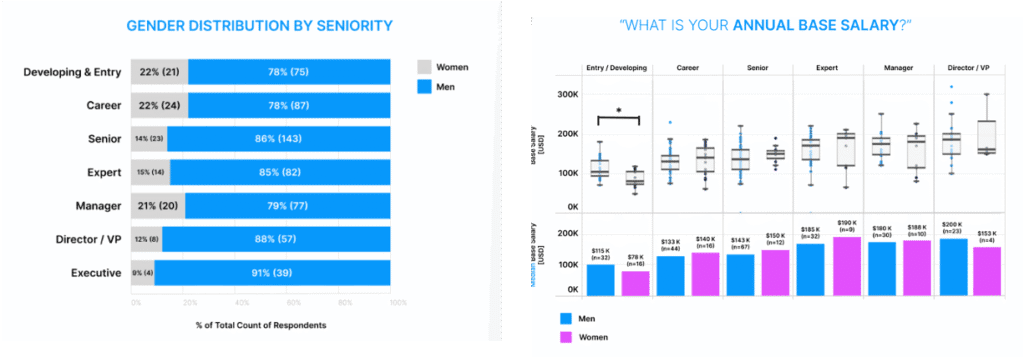
Diversity gaps persist. The workforce is 80% male, and women’s representation drops from 22% at entry level to just 9% at the executive level. Even more concerning, entry‑level women earn 30% less than men in comparable roles. Job titles do not explain the gap, suggesting systemic inequities that require proactive correction. Representation and pay gaps narrow at senior levels, but by then, many women have already left the industry.
Skills and Roles in Demand
If you think the biggest hiring gaps are in research roles, think again.
Volta’s data — echoed by the Center for Automotive Research’s BIETNA report — shows that manufacturing process engineers, cell engineers, and production leaders are the hardest roles to fill. Employers cite manufacturing scale‑up, process engineering, testing and failure analysis, quality control, and data science as their most urgent technical needs.
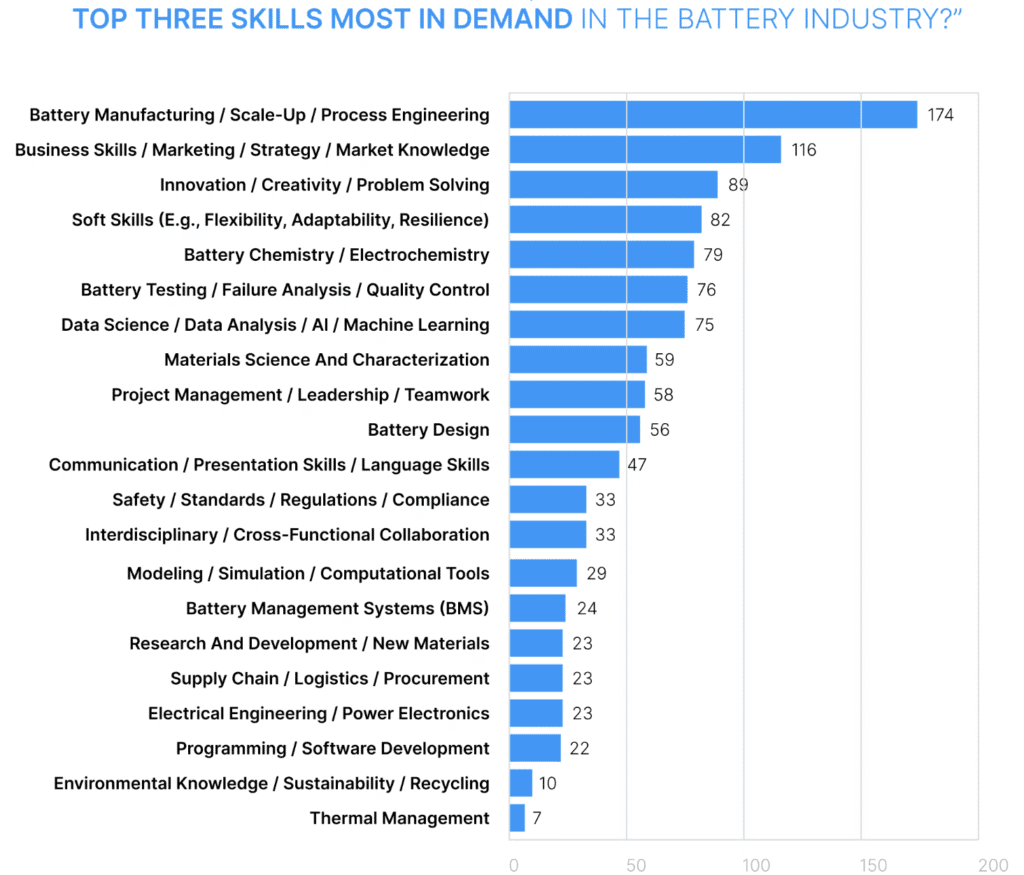
Just as striking: soft skills are career rocket fuel. While technical skills open the door (comprising 53% of hiring requirements), 83% of career advancement factors are soft skills — curiosity, critical thinking, communication, and leadership. The takeaway? Companies should invest in technical and interpersonal skill development, and professionals should view soft skills as non‑negotiable for leadership pathways.
Compensation and the Retention Paradox
Entry‑level battery salaries are strong — median U.S. base pay starts at $90,000, a 9–23% premium over adjacent engineering fields. Yet only half of professionals are satisfied with their compensation, and one‑third believe they are underpaid. Volta’s data reveals a clear pattern: professionals join companies for mission, innovation, and growth potential — but they leave for pay and career progression.
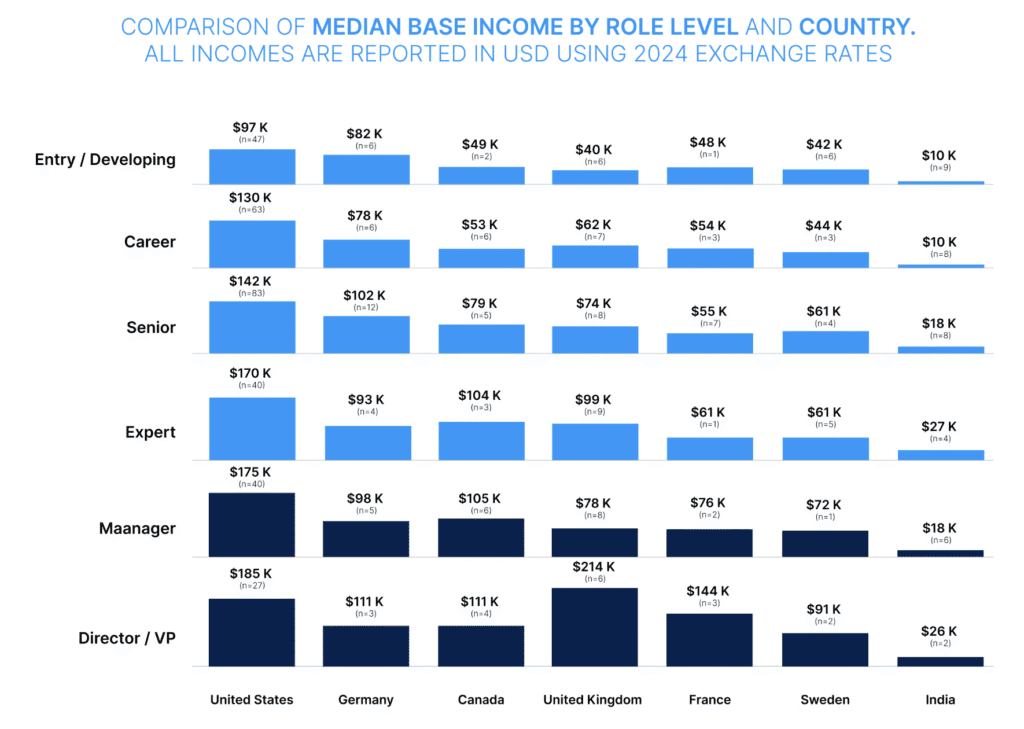
This is the salary paradox: the industry successfully attracts mission‑driven talent, then loses them because financial recognition and career pathways don’t keep pace. The fix is clear:
- Publish salary bands and conduct annual equity audits — especially at entry level where the gender gap is most severe.
- Create visible progression frameworks that show employees how to move from IC to lead to manager.
- Balance workloads during scale‑up phases, where leaders often exceed 50–65 hours per week.
Mini Case Example: How One Company Closed the Gap
Consider the case of a mid‑sized U.S. cell manufacturer that faced 40% annual turnover among process engineers. After conducting a compensation audit, they:
- Published salary bands and bonus structures internally.
- Introduced a two‑year career ladder with defined promotion criteria.
- Partnered with a local technical college to offer a paid apprenticeship program.
Within 12 months, turnover dropped by 18%, time‑to‑fill shrank by 25%, and employee engagement scores rose sharply — proving that transparency and early career development investments directly improve retention and productivity.
Students and the Future Pipeline
Students are optimistic — 80% say they’re bullish on the industry — but only 34% feel they have the right skills, and 43% don’t know which roles to apply for. Most aspire to R&D roles, while zero of the 78 students surveyed listed manufacturing or process engineering as a desired role, despite those being the industry’s biggest gaps.
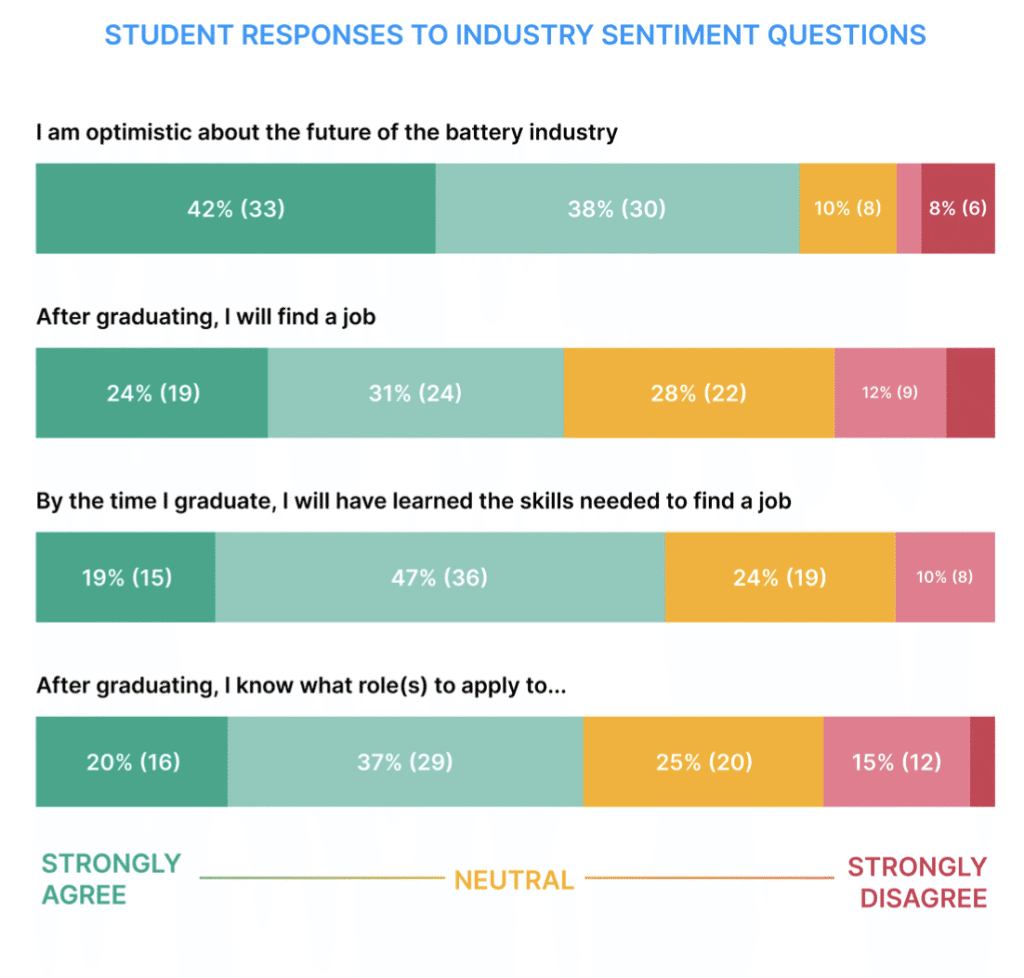
This is where industry and academia must partner:
- Align curricula with real hiring demand (equipment design, manufacturing know‑how, recycling).
- Provide hands‑on internships and apprenticeships — DOE’s new 21st‑Century Workforce Strategy specifically calls for earn‑while‑you‑learn models and standardized certifications.
- Communicate that production roles are not a “back‑door” into the industry — they are mission‑critical, high‑impact career paths.
The DEI Imperative
Closing the gender gap isn’t just a fairness issue — it’s a growth issue. Companies with gender‑diverse leadership teams outperform on innovation and profitability, yet women leave the battery industry earlier and more often than men. Shorter tenures (1 year vs. 2+ for men at entry level, half as long at the executive level) disrupt continuity and weaken the leadership pipeline.
Action steps:
- Close pay gaps first — correct inequities quickly and at all levels, and create metrics to maintain.
- Mentor and sponsor women and underrepresented groups into leadership roles.
- Measure promotion rates and tenure parity by gender to track real progress.
Why It All Matters
Scaling the workforce is as critical as scaling the gigafactories. Without the right engineers, operators, and leaders in place, all the incentive / research funding and GWh announcements in the world won’t deliver the energy transition on schedule.
The battery industry is young, ambitious, and mission‑driven. That means it has a once‑in‑a‑generation opportunity to build the most capable, equitable, and future‑ready workforce of any sector in energy. The question isn’t even whether we will seize it, it’s how we will.
Call to Action
If you are a battery industry leader, now is the time to:
- Benchmark your compensation practices and publish salary bands.
- Build structured career ladders and mentorship programs.
- Partner with universities to align curricula with real‑world hiring needs.
- Invest in leadership and soft‑skills training for your rising stars.
- Lean into recruiting networks, and build a talent pipeline in advance of when you need it.
The energy transition won’t wait. Neither should your talent strategy.
Sources reviewed for this update include:
- Centricity Search Group Placement and Salary Data
- Volta Foundation, Battery Talent Census Report (Sep 5, 2025) (all charts from this report)
- Center for Automotive Research (CAR), Battery Industry Education & Training Needs Assessment (BIETNA) (Feb 2024).
- U.S. DOE & USEER 2024 (Oct 2024) + DOE workforce strategy & workforce development briefs (Jun/Sep 2024).
- McKinsey, Battery 2030 (Jan 2023) and regional supply–demand trends (Aug 2025).
- E2, Clean Jobs America 2024 (Sep 2024).