
The Hidden Talent Pool: How Cross-Sector Skills are Powering Tomorrow’s Teams

There’s something incredible happening across the tech ecosystem right now.
Lines are blurring. Sectors are converging. And talent is crossing boundaries faster than ever before.
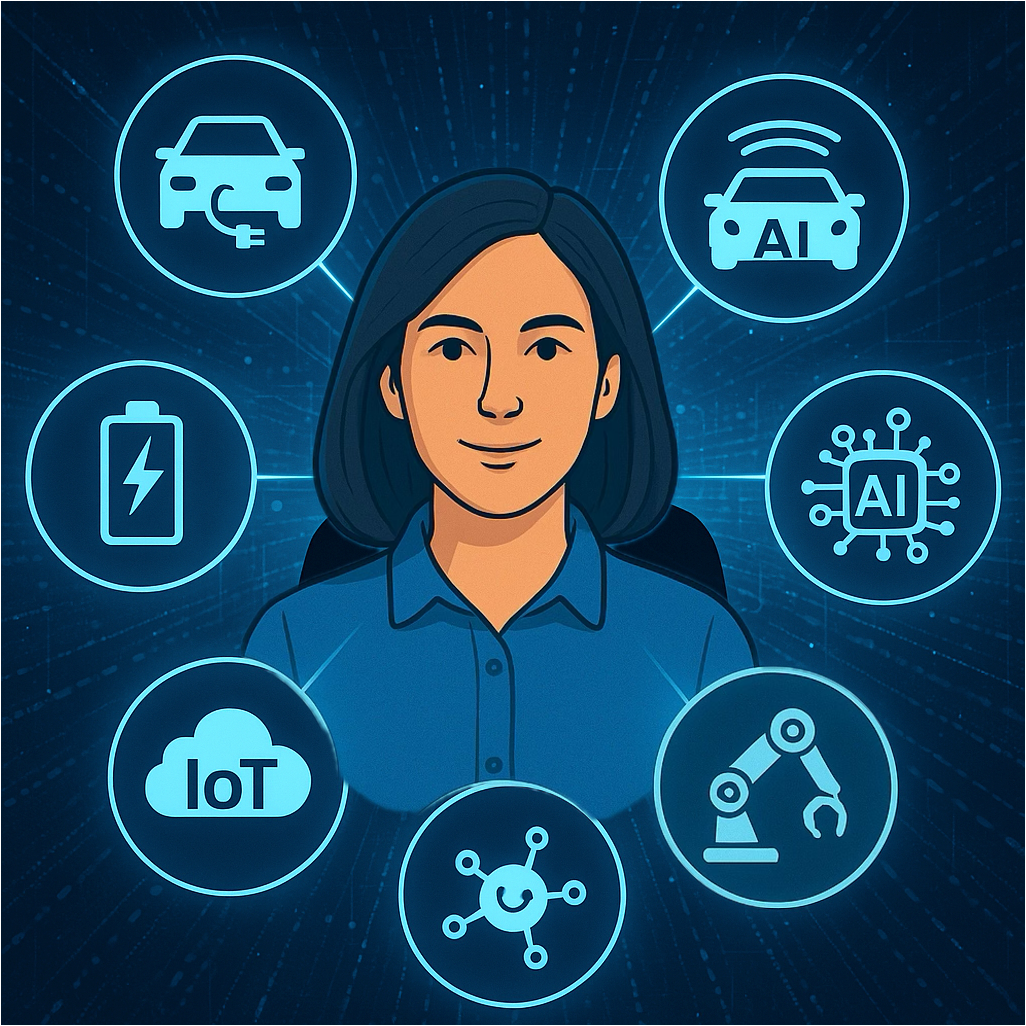
What used to be separate worlds—EV, energy storage, AI, IoT, robotics, and autonomy—are now deeply interwoven. The result? Innovation is accelerating. And the people driving it are some of the most adaptable, future-ready professionals in the market.
The Convergence of Industries
Take a look at any high-growth company building in clean tech or next-gen mobility, and you’ll see the same thing: hybrid teams.
- Battery engineers collaborating with autonomous software developers
- IoT specialists integrating AI into grid-edge systems
- Robotics experts designing tools for smart manufacturing and EV assembly
- Vehicle software teams working alongside energy storage modelers
This isn’t a future vision. It’s the present reality.
The Talent is Already Moving
There’s a growing pool of professionals who’ve built careers in one domain and are now applying their expertise in another.
Consider just a few examples:
- From robotics to energy storage
- From embedded systems to grid-edge innovation
- From AI and autonomy to advanced manufacturing and EV infrastructure
- From vehicle software engineering to intelligent microgrid control systems
These aren’t lateral moves. They’re strategic redeployments of high-impact skills into rapidly evolving adjacent markets.
The Rise of Transferable Skills
What enables these transitions? A growing recognition that many of the most in-demand skills today are not locked to a single sector—they’re versatile, foundational, and often gained through a range of professional experiences.
As Stanford University puts it, “Transferable competencies are relevant no matter your degree, discipline, or career goals.” They coach their students entering the workforce to be industry agnostic, and focus on the value they create through transferable skills
MIT echoes this, particularly when advising professionals transitioning from academia to industry: “Industry employers are looking for transferable skills—skills that are not necessarily specific to a single job but apply broadly across roles and sectors.”
These include systems thinking, data fluency, simulation and modeling, embedded programming, automation, cloud platforms, and the ability to integrate hardware and software under real-world constraints.
Why Hiring Mindsets Need to Shift
Too often, job descriptions default to narrowly defined qualifications. But in sectors that are converging, this can limit access to exceptional talent.
The best candidate for an energy storage role might have come from EV.
The right person for a robotics deployment might be sitting inside a smart grid startup.
Forward-looking teams are adjusting. They’re:
- Redefining job requirements to emphasize capability over category
- Reframing interviews to value systems knowledge and adaptability
- Staying open to candidates with cross-sector experience
- Partnering with recruiters and advisors who see the full picture
The Takeaway
As clean tech, automation, and digital infrastructure converge, the most innovative teams will be built not just by deep specialists—but by people who bring breadth, adaptability, and insight across domains.
The talent is out there. It’s just not always where you expect it to be.
For hiring managers and business leaders ready to build what’s next, the most important question may no longer be, “Where did this person come from?”
It might be, “Where else could they take us?”